

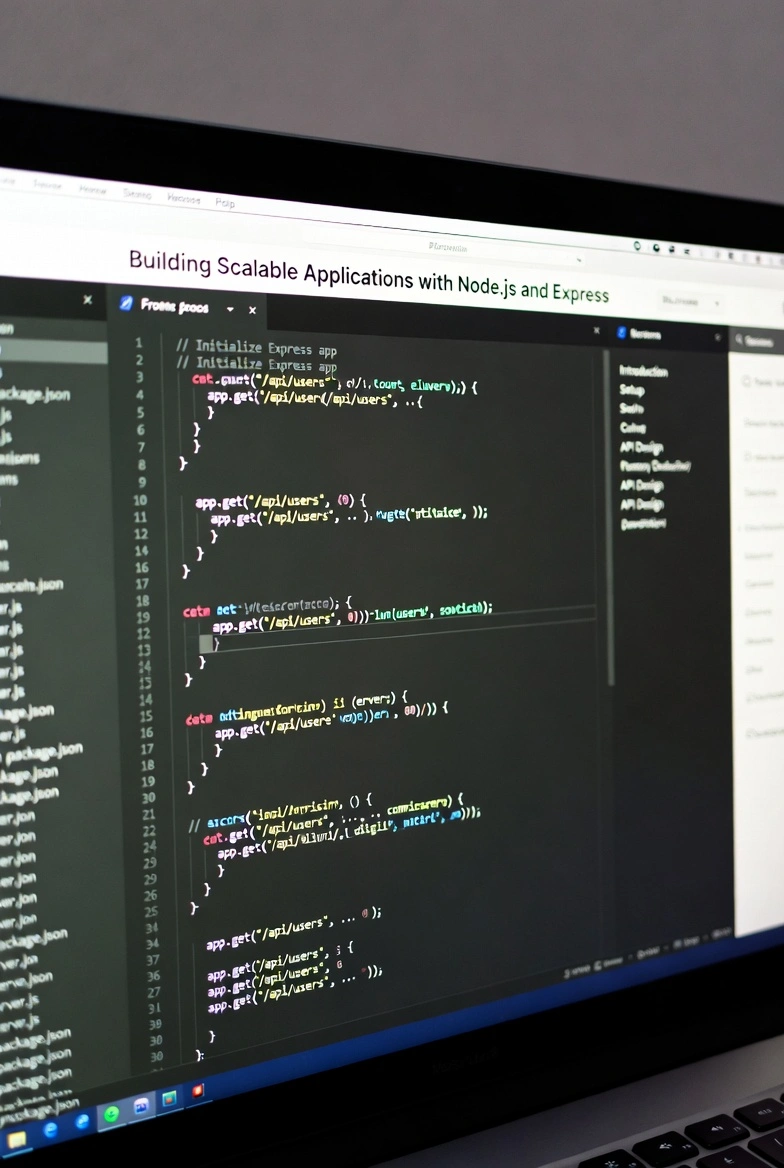
Building scalable applications is a core requirement for modern web development. Node.js and Express provide a powerful combination for creating fast and efficient server-side applications. Developers can handle high traffic, improve performance, and maintain code effectively. Understanding these tools and their ecosystem is essential for building applications that scale smoothly in production environments.
1. Introduction to Node.js and Express
What is Node.js
Node.js is a JavaScript runtime built on Chrome’s V8 engine. It allows developers to run JavaScript on the server. Node.js is event-driven and non-blocking. This makes it suitable for handling multiple simultaneous connections without slowing down. Developers use Node.js to build APIs, real-time applications, and microservices.
What is Express
Express is a minimal and flexible Node.js framework. It simplifies server-side development by providing a set of features for web and mobile applications. Express handles routing, middleware, and HTTP requests efficiently. Developers use Express to create RESTful APIs, server-side rendered pages, and scalable back-end services.
2. Advantages of Using Node.js and Express
High Performance
Node.js uses an event-driven architecture and non-blocking I/O operations. This allows applications to process multiple requests concurrently. Express adds minimal overhead. Together they deliver high performance for web applications and APIs. Performance tuning and efficient coding patterns further enhance responsiveness.
Scalability
Scalability is crucial for applications expecting growth. Node.js supports horizontal and vertical scaling. Developers can deploy multiple instances across servers. Express simplifies code organization and routing. This structure makes scaling easier while maintaining maintainable and modular codebases.
3. Building Scalable Architectures
Microservices Architecture
Microservices divide applications into smaller, independent services. Each service handles a specific functionality. Node.js and Express support microservices effectively. Developers can deploy and scale services independently. This reduces system complexity and improves maintainability for large applications.
API Design Best Practices
APIs are central to scalable applications. RESTful APIs allow standardized communication between services. Developers design endpoints, manage authentication, and handle errors effectively. Express provides tools to define routes, manage middleware, and handle request-response cycles efficiently. Good API design ensures future scalability.
4. Handling Data and Databases
Choosing the Right Database
Databases are essential for storing and retrieving data efficiently. Node.js works well with SQL databases like MySQL and PostgreSQL. It also integrates seamlessly with NoSQL databases like MongoDB and Firebase. Choosing the right database depends on application requirements, data structure, and expected traffic.
Database Optimization
Optimizing database queries improves application performance. Node.js and Express support connection pooling, indexing, and caching. Developers use ORM tools like Sequelize and Mongoose for structured data management. Efficient database handling reduces latency and supports high concurrency.
5. Deployment and Maintenance
Cloud Deployment
Deploying scalable applications requires reliable infrastructure. Cloud platforms such as AWS, Azure, and Google Cloud provide flexibility and scalability. Node.js applications can be containerized using Docker for consistent environments. Express applications benefit from cloud-based load balancing and auto-scaling.
Monitoring and Testing
Testing and monitoring ensure reliability and performance. Developers implement unit testing, integration testing, and end-to-end testing for robust applications. Monitoring tools like New Relic and Prometheus track server metrics. Regular maintenance, log analysis, and optimization keep applications scalable over time.
Building scalable applications with Node.js and Express requires a solid understanding of server-side development, architecture patterns, and deployment strategies. Developers must plan for performance, maintainability, and growth. Using Node.js for high concurrency and Express for simplified routing and middleware management allows applications to handle increasing traffic efficiently. Applying best practices for API design, database optimization, and cloud deployment ensures long-term scalability and reliability.
Keywords Used in This Blog
- Node.js
- Express
- scalable applications
- performance
- API
- database
- microservices
- deployment
- cloud
- JavaScript